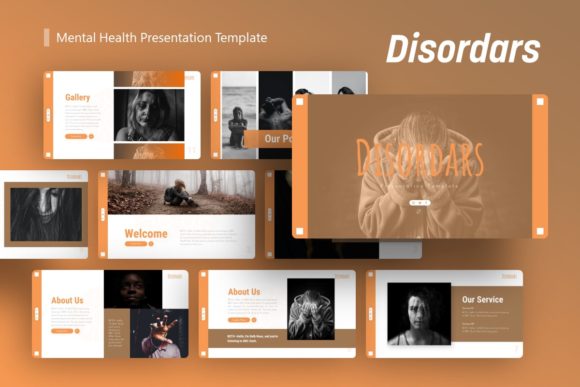
Evaluating the Disordars Mental Health Presentation Template
Selecting the appropriate visual framework for mental health topics requires a balance between clinical accuracy and empathetic design. The Disordars Mental Health Presentation is a specialized template designed to address this specific niche, though its utility extends into broader corporate and creative applications. For professionals researching presentation tools, understanding the functional scope, technical specifications, and practical limitations of this asset is essential for making an informed procurement decision. This evaluation explores whether the Disordars Mental Health Presentation aligns with specific project goals, audience expectations, and technical workflows.
Defining the Asset and Its Scope
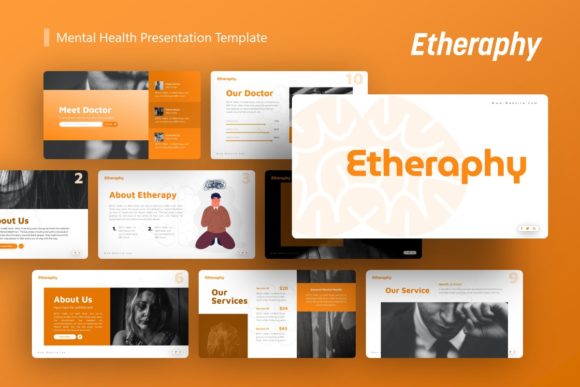
The Disordars Mental Health Presentation is primarily a PowerPoint-based (.PPTX) resource containing 36 distinct slides. While the nomenclature suggests a strict focus on psychological disorders or clinical education, the architecture of the template supports a wider variety of use cases. It functions as a multipurpose vessel suitable for creative agencies, company profiles, corporate business updates, portfolios, photography showcases, pitch decks, startups, and personal branding.
This duality is significant for evaluators. The template provides thematic elements relevant to mental health—such as calming color palettes, supportive imagery placeholders, and structured layouts for sensitive data—while retaining the flexibility required for general business communication. Users should view this not merely as a medical tool, but as a versatile design system that has been optimized for tone-sensitive content. The inclusion of handcrafted infographics and pixel-perfect illustrations indicates a focus on high-fidelity visual communication rather than simple text arrangement.
Key Benefits for Decision Makers
When comparing presentation templates, stakeholders must weigh tangible advantages against project requirements. Several features of the Disordars Mental Health Presentation offer distinct value propositions for specific user segments.
- Master Slide Architecture: The template is built on Master Slides, which is a critical technical consideration for teams. This allows for global, consistent changes across multiple slides without manual formatting. For organizations maintaining brand consistency across various departments or presenters, this feature reduces error rates and saves significant time during the revision process.
- Visual Data Communication: Mental health and corporate reporting often involve complex statistics. The inclusion of handcrafted, editable infographics allows users to visualize data natively within PowerPoint. This eliminates the need to export charts from external software like Excel or Illustrator, streamlining the workflow and ensuring that graphics remain resizable and editable within the native environment.
- Tone-Appropriate Aesthetics: Generic business templates often lack the nuance required for mental health discussions. This template offers pre-designed aesthetics that avoid overly sterile or aggressively corporate vibes, helping presenters establish trust and empathy with their audience immediately.
- Comprehensive Asset Inclusion: Beyond the .PPTX file, the package includes documentation and vector icons. For users who may not be professional designers, the documentation serves as a vital guide to maximizing the template’s potential, while vector icons ensure scalability across different screen sizes and print formats without pixelation.
Tradeoffs and Practical Considerations
No template is universally perfect, and objective evaluation requires acknowledging limitations. Potential users of the Disordars Mental Health Presentation should consider the following tradeoffs before acquisition.
Image Licensing and Replacement: A crucial operational detail is that all images in the demo are for preview purposes only and are not included in the downloadable files. This means the "out-of-the-box" experience will look incomplete. Organizations must have access to their own licensed stock photography or original assets. If a team lacks a budget for high-quality, tone-appropriate imagery, the final presentation may fail to match the quality of the demo, potentially undermining the message.
Niche Versus Generalist Tension: While marketed for diverse uses including pitch decks and photography portfolios, the underlying design language is rooted in mental health themes. Users intending to use this for a high-energy tech startup pitch or a luxury fashion portfolio may find the inherent aesthetic too subdued or soft. Conversely, those seeking a strictly clinical medical template might find the creative agency elements distracting. Evaluators must determine if the hybrid nature of the design supports or conflicts with their specific narrative.
PowerPoint Dependency: Although .PPTX is a universal standard, advanced features like master slides and custom infographics can sometimes behave unpredictably when converted to other formats (e.g., Keynote or Google Slides). Teams operating exclusively outside the Microsoft ecosystem should test compatibility before committing, as some formatting fidelity may be lost during conversion.
Situational Fit Analysis
Determining whether the Disordars Mental Health Presentation is the right choice depends heavily on the specific context of use. The following scenarios highlight where this template performs best versus where alternatives may be superior.
Strong Fit Scenarios
- Healthcare and Wellness Organizations: Clinics, therapy practices, and non-profits focusing on mental well-being will find the most immediate value. The pre-established visual tone aligns with industry standards for patient-facing and stakeholder communications.
- HR and Internal Corporate Training: Companies rolling out employee assistance programs or wellness initiatives benefit from a template that signals care rather than bureaucracy. The 36-slide depth allows for comprehensive training modules without needing to source additional layouts.
- Creative Agencies in Health Sectors: Marketing firms specializing in healthcare clients can use this as a foundational pitch deck or portfolio structure, demonstrating industry-specific competence through design choices.
- Educational Institutions: Universities and schools presenting research or student services related to psychology can leverage the infographic capabilities to make academic data more accessible.
When to Consider Alternatives
- High-Stakes Financial Pitching: If the primary goal is securing venture capital for a fintech or heavy industry startup, a template explicitly designed for financial modeling and investor metrics may be more appropriate than one with mental health undertones.
- Minimalist Text-Heavy Reports: For white papers or annual reports requiring dense textual layouts with minimal visual interruption, a document-focused template or a minimalist slide deck may offer better readability than an illustration-heavy design.
- Non-PowerPoint Workflows: Teams standardized on Figma, Canva, or LaTeX should seek native templates for those platforms to avoid friction in collaboration and version control.
Making the Final Decision
The decision to adopt the Disordars Mental Health Presentation should be driven by a gap analysis between current capabilities and desired outcomes. If the primary need is to rapidly deploy professional, empathetic visuals for mental health or adjacent corporate topics, and the team possesses the necessary image assets and PowerPoint proficiency, this template represents a high-efficiency solution. The master slide functionality and editable vector graphics provide long-term utility that justifies the investment beyond a single use case.
However, if the project demands a radically different aesthetic, relies on non-Microsoft software, or lacks the resources to source replacement imagery, the efficiency gains may be negated by customization overhead. Evaluators are encouraged to review the documentation file prior to purchase to verify that the technical implementation matches their team's skill level. Ultimately, this template serves as a robust starting point for sensitive, visually rich presentations, provided its specific constraints are understood and managed proactively.