Evaluating the Medicare Medical Presentation Template for Professional Use
In the landscape of professional communication, particularly within healthcare, biotechnology, and corporate wellness sectors, the visual delivery of information is as critical as the data itself. The Medicare Medical Presentation Template emerges as a specialized resource designed to bridge the gap between complex medical information and accessible visual storytelling. While primarily positioned for medical contexts, an evaluation of its structural components reveals a versatility that extends into creative agencies, startup pitch decks, and personal portfolios. For professionals aged 20 to 50 who manage content creation or business development, understanding the practical utility of this asset requires looking beyond its name to examine its functional architecture and adaptability in real-world workflows.
Core Architecture and Content Volume
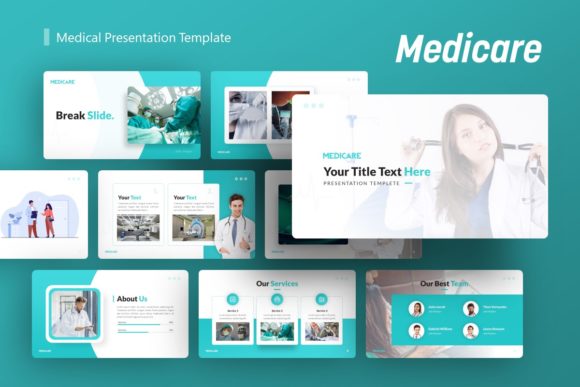
The foundational value of any presentation template lies in its slide count and layout diversity. The Medicare Medical Presentation Template provides 36 distinct slides per template variant. From a production standpoint, this volume is significant. It moves beyond simple title and content layouts to offer a comprehensive narrative structure. For a medical professional preparing a quarterly review or a startup founder building a seed-round pitch deck, 36 slides provide enough modular components to construct a complete story without requiring external design resources.
This depth allows users to maintain visual consistency across lengthy presentations. In medical or corporate reporting, where data density can be high, having pre-designed variations for charts, timelines, and team introductions ensures that the audience remains engaged rather than overwhelmed. The inclusion of handcrafted infographics specifically designed within PowerPoint is a notable efficiency booster. Rather than importing static images from third-party vector software, these elements remain native to the platform, allowing for direct editing of colors, labels, and data points without breaking the design integrity.
Technical Flexibility and Master Slide Integration
A common frustration with lower-quality templates is the reliance on grouped objects or flattened images that resist modification. This template addresses that issue through a rigorous adherence to Master Slides. For marketers and educators who must frequently update branding or global color schemes, this feature is non-negotiable. Changes made at the master level propagate instantly across all 36 slides, ensuring pixel-perfect consistency. This technical foundation suggests the template was built by designers who understand long-term maintenance, not just initial aesthetic appeal.
The claim of "pixel-perfect illustrations" and resizable graphics warrants practical consideration. In responsive presentation environments—where slides may be projected on everything from 4K conference screens to laptop displays in small meeting rooms—vector-based scalability prevents the blurriness associated with rasterized assets. Furthermore, the drag-and-drop picture placeholders streamline the workflow for freelancers and agency teams working under tight deadlines. Instead of manually cropping and masking photos, users can populate the template rapidly, maintaining professional alignment and spacing automatically.
Versatility Beyond Healthcare Applications
Despite the specific nomenclature, the Medicare Medical Presentation Template demonstrates surprising efficacy in non-medical verticals. The clean, structured aesthetic inherent in medical design translates exceptionally well to other industries requiring trust and clarity. For a Creative Agency or Company Profile, the template’s emphasis on whitespace and organized typography conveys professionalism. The infographic slides, originally intended for patient statistics or treatment pathways, function equally well for marketing analytics, user growth metrics, or financial projections in a Pitch Deck.
For Personal Portfolios and Photography showcases, the template offers a disciplined grid system that lets visual work take precedence. The neutral color palettes often associated with medical themes serve as an excellent backdrop for creative work, preventing the template from competing with the portfolio pieces themselves. Entrepreneurs and small business owners will find that the "Corporate and Business" applicability is genuine; the layout hierarchy supports executive summaries, operational overviews, and strategic planning sessions effectively. This cross-industry utility maximizes the return on investment for users who may need to produce varied content types throughout the year.
Asset Management and File Deliverables
When evaluating digital assets, the completeness of the deliverable package determines long-term viability. This template includes the essential .PPTX file alongside a documentation file and a vector icon set. The inclusion of dedicated vector icons is a practical advantage, as it reduces the need to source matching iconography from disparate libraries, which often leads to stylistic inconsistency. The documentation file serves as a crucial reference for less experienced PowerPoint users, detailing how to manipulate master slides and edit infographics properly.
It is vital to note, with professional transparency, that all images shown in the demo are for preview purposes only and are not included in the final files. This is standard industry practice due to licensing restrictions, but it impacts workflow planning. Users must have their own repository of high-quality photography or access to stock image services. For medical professionals, this means ensuring they have appropriate, HIPAA-compliant, or licensed imagery ready before beginning customization. For photographers and creatives, this simply means curating their best work to fill the placeholders. Recognizing this limitation upfront prevents project delays and sets realistic expectations for the setup phase.
Practical Performance in Professional Workflows
In actual use, the Medicare Medical Presentation Template performs best for users who prioritize structure over radical artistic experimentation. Its strength is reliability. For a freelancer juggling multiple clients, the template acts as a stable framework that can be quickly rebranded. For an educator, the infographic capabilities transform dry lecture material into digestible visual concepts. However, users seeking avant-garde, chaotic, or highly experimental design layouts may find the template too rigid. Its design language is rooted in clarity, order, and accessibility—traits essential for medicine and business, but potentially limiting for abstract art presentations.
The editability of contents is comprehensive, yet it demands a baseline proficiency in PowerPoint. While the drag-and-drop features are intuitive, maximizing the value of the handcrafted infographics requires understanding how to ungroup and regroup elements responsibly. Professionals who treat PowerPoint as a serious design tool will appreciate the granularity of control available. Those accustomed to simpler, more automated tools may require a brief learning curve to utilize the master slide features effectively. This positions the template as a mid-to-high-tier resource suitable for serious practitioners rather than casual users looking for a one-click solution.
Strategic Value for Target Audiences
Determining whether this template fits your specific needs involves assessing your content type and frequency of use. For healthcare administrators, insurance providers, and medical researchers, it is a near-perfect fit, reducing design time while maintaining industry-appropriate aesthetics. For startups and entrepreneurs, it offers a polished, investor-ready appearance that signals organizational maturity. The 36-slide depth supports comprehensive storytelling that shorter templates cannot accommodate.
Marketers and bloggers can leverage the template for webinars, lead magnets, and internal reporting. The clean design ensures readability on mobile devices when exported to PDF, extending the content's lifespan beyond live presentations. Small business owners benefit from the dual-purpose nature of the asset; a single purchase covers both internal operational decks and external client-facing proposals. Ultimately, the Medicare Medical Presentation Template represents a pragmatic investment in visual communication infrastructure. It solves the problem of inconsistent design and slow production cycles, providing a reliable, editable, and professionally structured foundation for diverse presentation needs.
Final Considerations for Implementation
Before integrating this template into your workflow, audit your existing brand guidelines. Because the template is fully editable, it should be customized immediately upon acquisition to match your organization’s typography and color standards. Save this customized version as a new master file to preserve the original template for future reference or different projects. Additionally, consider the aspect ratio requirements of your primary presentation environment; verify that the template’s native dimensions align with your hardware to avoid formatting adjustments later.
The Medicare Medical Presentation Template succeeds because it balances specialized medical utility with broad corporate flexibility. It avoids the trap of being overly niche while maintaining enough specific features, like medical-grade infographics, to justify its categorization. For professionals who value efficiency, consistency, and professional polish, it serves as a robust tool in the content creation arsenal. By understanding its features, respecting its limitations regarding stock imagery, and leveraging its master slide architecture, users can significantly elevate the quality and impact of their visual communications across healthcare, business, and creative domains.