Covid-19 Symptoms Flyer: Design for Public Health
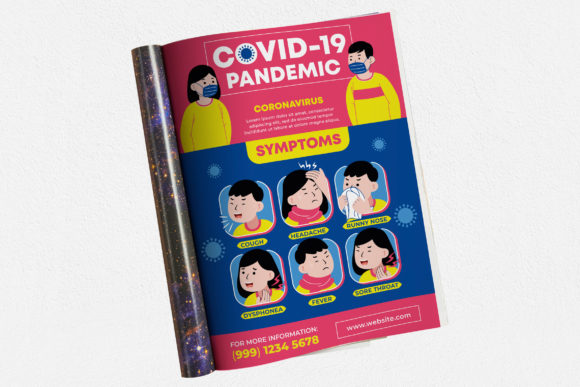
Effective health communication relies heavily on visual clarity. When disseminating critical information about a virus pandemic, the margin for error is non-existent. A well-crafted Covid-19 Symptoms Flyer serves as an immediate bridge between complex medical data and public understanding. It is not merely a decorative poster; it is a functional tool designed to save time, reduce anxiety, and promote safety through accessible design. For creators, marketers, and community leaders, having a reliable template transforms a daunting design task into a streamlined process of customization and deployment.
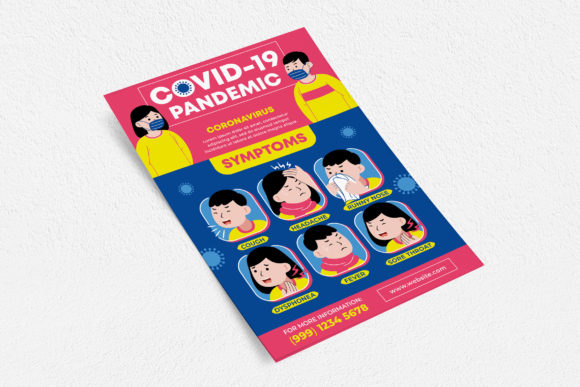
The challenge in pandemic communication is often balancing urgency with calm professionalism. Overly alarming graphics can cause panic, while sterile clinical designs may be ignored. This specific infographic template addresses that balance by offering a modern, stylish aesthetic that commands attention without inducing fear. By utilizing 100% vector art, the design maintains crispness at any scale, ensuring that whether you are printing a small handout for a clinic waiting room or a large-format poster for a community center, the legibility remains perfect. This technical foundation allows you to focus on the message rather than wrestling with pixelation or layout issues.
Adapting Visuals for Diverse Audiences
One of the most significant advantages of using an editable template is the ability to tailor the visual language to specific demographics. While the core symptoms of the virus remain constant, the way different groups consume information varies significantly. A generic approach often fails to resonate, whereas targeted adaptation increases compliance and retention.
- Corporate and Office Environments: In professional settings, the flyer should integrate seamlessly with existing brand guidelines. Use the easy-editable color features to match your company’s palette, transforming a standard health warning into part of your internal safety culture. The clean lines and modern typography work exceptionally well here, reinforcing a sense of organized competence.
- Educational Institutions: Schools and universities require high readability and approachability. You might adjust the text hierarchy to emphasize hygiene protocols alongside symptoms. Because the files are fully compatible with Adobe Illustrator CS6 and later, educators or administrative staff can quickly swap icons or simplify language for younger students without needing advanced design skills.
- Healthcare and Clinical Settings: Trust is paramount in medical environments. Here, the template’s structured layout helps organize dense information logically. Utilizing the high-resolution JPG export ensures that printed materials look sharp under clinical lighting, while the vector source files allow medical illustrators to add specific anatomical diagrams if necessary.
- Community and Non-Profit Outreach: For grassroots campaigns, accessibility is key. The resizable nature of the vector art means you can adapt the flyer for social media stories, digital kiosks, or physical mailers from a single source file. Changing background colors to high-contrast combinations can also improve readability for visually impaired community members.
Technical Flexibility for Creative Professionals
For designers and freelancers, time is a tangible asset. Creating a medically accurate infographic from scratch involves hours of research, icon creation, and typographic testing. This Covid-19 Symptoms Flyer template accelerates that workflow significantly. The inclusion of AI and EPS files ensures compatibility across different versions of Adobe Illustrator, making it a versatile addition to any creative toolkit.
The "100 Vector Art" feature is particularly valuable for iterative design. Unlike raster images, vectors allow you to scale elements infinitely without quality loss. This is essential when a client suddenly requests a billboard-sized version of a brochure design. Furthermore, the organized layer structure implied by the documentation file means you spend less time deciphering someone else's workflow and more time refining the content. The ability to edit text, images, and colors directly within Illustrator allows for rapid prototyping. You can present three distinct color variations to a stakeholder in the time it would usually take to create one draft.
Maintaining Clarity Through Customization
While customization is a powerful feature, it requires discipline. The goal of a symptoms flyer is instant comprehension. When adapting this template, adhere to principles of information design to ensure the final product remains effective.
- Prioritize Hierarchy: Do not make all text the same size. The title and primary symptoms should be dominant. Secondary information, such as helpline numbers or website links, should support the main message without competing for attention.
- Use Color Functionally: Color should guide the eye, not just decorate. Use red or orange sparingly to highlight critical warnings or fever indicators. Use calming blues or greens for background elements to maintain a professional, reassuring tone. Avoid neon or overly saturated palettes that can cause visual fatigue.
- Respect White Space: It is tempting to fill every inch of the flyer with information. Resist this urge. White space (or negative space) gives the viewer’s eyes a place to rest and helps separate distinct pieces of information. A cluttered flyer is often discarded unread.
- Verify Typography: The template includes links to fonts used, which is a crucial resource. Ensure any replacement fonts you choose are highly legible at a distance. Sans-serif typefaces generally perform better for health signage due to their clean forms and high x-heights.
Practical Applications Beyond the Poster
The utility of this template extends far beyond traditional print posters. In a digital-first world, the assets included in this package serve multiple formats. The high-resolution JPG is ready for immediate upload to websites, email newsletters, or social media feeds. However, the true power lies in the source files.
Consider breaking the flyer down into modular components for a social media campaign. Individual symptom icons from the vector set can be isolated to create a series of Instagram stories or LinkedIn carousel slides. This "micro-content" approach reinforces the message through repetition without overwhelming the audience. For bloggers and publishers, these isolated elements can serve as featured images or inline graphics to break up long-form articles about health safety.
Small business owners can use the template to create window decals or point-of-sale signage. By resizing the canvas in Illustrator, the same design system used for an employee handbook can be applied to customer-facing materials, creating a cohesive safety narrative across all touchpoints. This consistency builds trust; customers feel safer when they see that a business has thoughtfully integrated health protocols into its overall visual identity.
Ensuring Accuracy and Responsibility
Design tools provide the vessel, but accuracy provides the value. When using any Covid-19 Symptoms Flyer template, always cross-reference the content with current guidelines from reputable health organizations like the WHO or CDC. Symptoms and recommendations evolve; a template created months ago may need textual updates to remain valid.
The documentation file included with this product is an excellent starting point, but it should not replace official verification. As a creator, your responsibility is to ensure that the ease of editing does not lead to the spread of outdated information. Set a schedule to review your evergreen templates quarterly. This practice not only protects public health but also maintains your professional reputation as a reliable source of communication.
Ultimately, this template is a catalyst for better public health communication. It removes technical barriers, allowing educators, entrepreneurs, and designers to produce professional-grade safety materials quickly. By combining modern aesthetics with practical functionality, it empowers you to contribute meaningfully to pandemic response efforts. Whether you are designing for a global corporation or a local neighborhood watch, the right tools make the difference between noise and meaningful connection. Happy designing, and more importantly, happy creating for a safer community.