Presentation Template - Armor: Elevating Visual Communication for Modern Professionals
In an era where digital attention spans are measured in seconds, the quality of your visual communication often determines whether your message lands or gets lost. The Presentation Template - Armor arrives at a critical juncture for professionals, creators, and business leaders who understand that design is not merely decoration but a fundamental component of persuasion. Whether you are launching a startup, showcasing a photography portfolio, or reporting quarterly metrics to stakeholders, the structural integrity of your slide deck influences how your audience perceives your competence and credibility. This template system offers a robust foundation for diverse needs, bridging the gap between high-end agency aesthetics and practical corporate functionality.
The relevance of a versatile tool like Armor extends beyond simple aesthetics. It addresses a growing pain point in modern workflows: the need for speed without sacrificing brand consistency. As remote work and hybrid collaboration models become standard, asynchronous communication through recorded presentations and shareable decks has surged. Audiences now expect polished, accessible, and visually coherent materials that can stand alone without a narrator. Armor responds to this shift by providing a comprehensive ecosystem of 35 slides per template, ensuring that users have enough variety to construct a narrative arc while maintaining a unified visual language throughout.
The Evolution of Digital Storytelling and Design Efficiency
Historically, creating a professional-grade presentation required either expensive outsourcing to design agencies or hours of frustrating formatting within standard software. The market has since evolved toward democratization, where high-quality design assets are accessible to non-designers. However, accessibility often came at the cost of generic, overused layouts that failed to distinguish brands. The current trend favors modular, handcrafted systems that feel bespoke yet remain editable. Armor fits precisely into this niche by offering pixel-perfect illustrations and handcrafted infographics directly within PowerPoint.
This evolution reflects a broader change in how businesses and creatives approach content creation. There is less tolerance for rigid, unchangeable templates and higher demand for flexible frameworks. Users want to drag and drop images into placeholders without breaking the layout grid. They need vector icons that scale infinitely for large screens and print materials alike. By basing the template on Master Slides, Armor allows for global changes across dozens of slides instantly, respecting the user's time while preserving design integrity. This efficiency is vital for entrepreneurs and marketers who must iterate quickly based on feedback or changing market conditions.
Versatility Across Industries and Use Cases
One of the most significant advantages of the Presentation Template - Armor is its adaptability. In the past, users often had to purchase separate templates for different projects—a pitch deck for investors, a portfolio for clients, and a company profile for partnerships. This fragmentation was both costly and inefficient. Armor consolidates these needs into a single, multifaceted resource suitable for:
- Creative Agencies and Portfolios: Showcasing visual work requires clean layouts that let the imagery breathe. The template’s photography-focused slides provide ample whitespace and balanced typography.
- Corporate and Business Profiles: Trust is built through clarity. The included infographic slides transform complex data into digestible visuals, essential for annual reports or internal training.
- Startups and Pitch Decks: Investors review hundreds of decks annually. A structured, professional template helps founders focus on their value proposition rather than alignment issues, signaling maturity and preparedness.
- Personal Branding: Freelancers and consultants can use the personal portfolio variations to articulate their services and case studies with the same polish as a large firm.
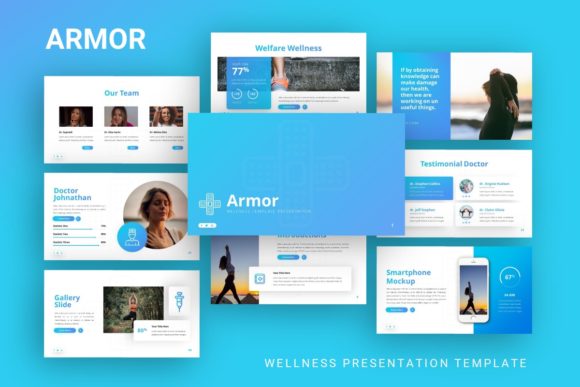
This cross-industry utility makes Armor a sustainable investment. Rather than chasing trends with disposable designs, users acquire a toolkit that grows with their career or business. The inclusion of the "Armor Wellness" variation further demonstrates this foresight, acknowledging the rising importance of health, mindfulness, and holistic services in the professional landscape. As wellness becomes integrated into corporate culture and consumer lifestyles, having a dedicated aesthetic for this sector ensures relevance in emerging markets.
Technical Features That Support Creative Freedom
While visual appeal captures attention, technical execution retains it. A beautiful template that breaks when edited is ultimately useless. Armor prioritizes user experience through specific technical features designed for real-world application. The reliance on Master Slides is perhaps the most critical aspect for long-term usability. This feature ensures that fonts, colors, and logo placements remain consistent even as new slides are added or rearranged. For teams collaborating on a single deck, this reduces version control nightmares and maintains brand compliance.
Furthermore, the emphasis on editable and resizable graphics addresses a common frustration with premium templates. Many designers lock elements to preserve the preview look, forcing users to resort to third-party software for minor adjustments. Armor takes a different approach by keeping all graphics native to PowerPoint. The handcrafted infographics are not static images; they are constructed from shapes and text boxes that users can modify to reflect their actual data. This distinction is crucial for E-E-A-T (Experience, Expertise, Authoritativeness, and Trustworthiness) in business communications, as it allows presenters to display accurate, proprietary information rather than generic placeholder charts.
The drag-and-drop picture placeholders streamline the workflow for content-heavy presentations. Instead of manually cropping and masking photos, users can simply insert their media, and the template automatically applies the correct dimensions and effects. This feature is particularly valuable for photographers and creative directors who need to swap out portfolio pieces frequently. Combined with the included vector icon set, the template provides a self-contained design environment that minimizes context switching between applications.
Practical Implications for Modern Workflows
Adopting a system like Presentation Template - Armor has tangible implications for productivity and professional perception. For freelancers and small business owners, time spent on formatting is time subtracted from revenue-generating activities. By reducing deck creation time from days to hours, the template directly impacts profitability. More importantly, it lowers the cognitive load associated with design decisions. When the layout is solved, mental energy can be redirected toward refining the narrative, practicing delivery, and anticipating audience questions.
For educators and trainers, the structured nature of the 35-slide library supports pedagogical flow. Effective teaching requires pacing and variety to maintain engagement. Having access to distinct slide types—comparison, timeline, process, team introduction, and data visualization—allows instructors to map their curriculum visually. This prevents the monotony of bullet-point fatigue and caters to diverse learning styles through visual reinforcement.
In the context of fundraising and sales, the template serves as a risk mitigation tool. Poor design can subconsciously signal a lack of attention to detail or operational immaturity. By utilizing a pixel-perfect, professionally crafted framework, startups and agencies level the playing field against larger competitors with dedicated design departments. The polish provided by Armor allows the content to be judged on its merits, free from the distraction of amateur formatting errors.
Navigating Assets and Best Practices
To maximize the value of this template, users should understand what is included and how to manage expectations. The package contains the PowerPoint .PPTX file, a documentation file for guidance, and vector icons. It is important to note that all images in the demo are for preview purposes only and are not included in the files. This is standard industry practice that protects intellectual property rights of photographers, but it also serves a functional purpose: it encourages users to populate the deck with their own authentic visuals rather than relying on stock photography that may appear in other presentations.
When implementing Armor, consider the following best practices to ensure optimal results:
- Leverage the Documentation: Before diving in, review the included documentation file. Understanding how the Master Slides are organized will save significant time during customization.
- Maintain Visual Hierarchy: While all graphics are editable, resist the urge to fill every whitespace. The template’s effectiveness relies on balance. Let the pixel-perfect illustrations guide your content density.
- Customize Infographics Responsibly: When editing the handcrafted infographics, ensure your data labels remain legible. Test the slides on different screen sizes if presenting virtually to guarantee readability.
- Update Global Themes First: Use the Slide Master view to apply your brand colors and logos globally before editing individual slides. This ensures consistency and prevents manual overrides that break the template logic.
Future-Proofing Your Presentation Strategy
As we look toward the future of digital communication, the line between static presentations and interactive experiences continues to blur. Templates like Armor are evolving to support this transition by providing foundations that work across platforms. Because the files are native .PPTX, they remain compatible with emerging AI-powered presentation tools and cloud-based collaboration suites. Investing in a well-structured, master-slide-based template is essentially investing in a format-agnostic asset library.
Moreover, the inclusion of the Armor Wellness variant suggests an awareness of sector-specific design needs. As industries specialize, generic corporate templates become less effective. We can expect continued demand for niche adaptations that respect the unique tone and regulatory considerations of specific fields. By choosing a template system that already acknowledges these nuances, users position themselves ahead of the curve, ready to communicate effectively in both traditional and emerging contexts.
Ultimately, the Presentation Template - Armor represents more than just a collection of slides; it is a strategic asset for anyone serious about visual communication. It balances the artistic demands of creative portfolios with the rigorous standards of corporate reporting, all while respecting the practical constraints of modern workflows. Whether you are pitching a revolutionary idea, documenting a personal journey, or educating a classroom, the right template does not just hold your content—it amplifies it. By combining ease of customization with professional-grade design architecture, Armor empowers users to focus on what matters most: connecting with their audience and delivering messages that resonate.